.svg)
.svg)

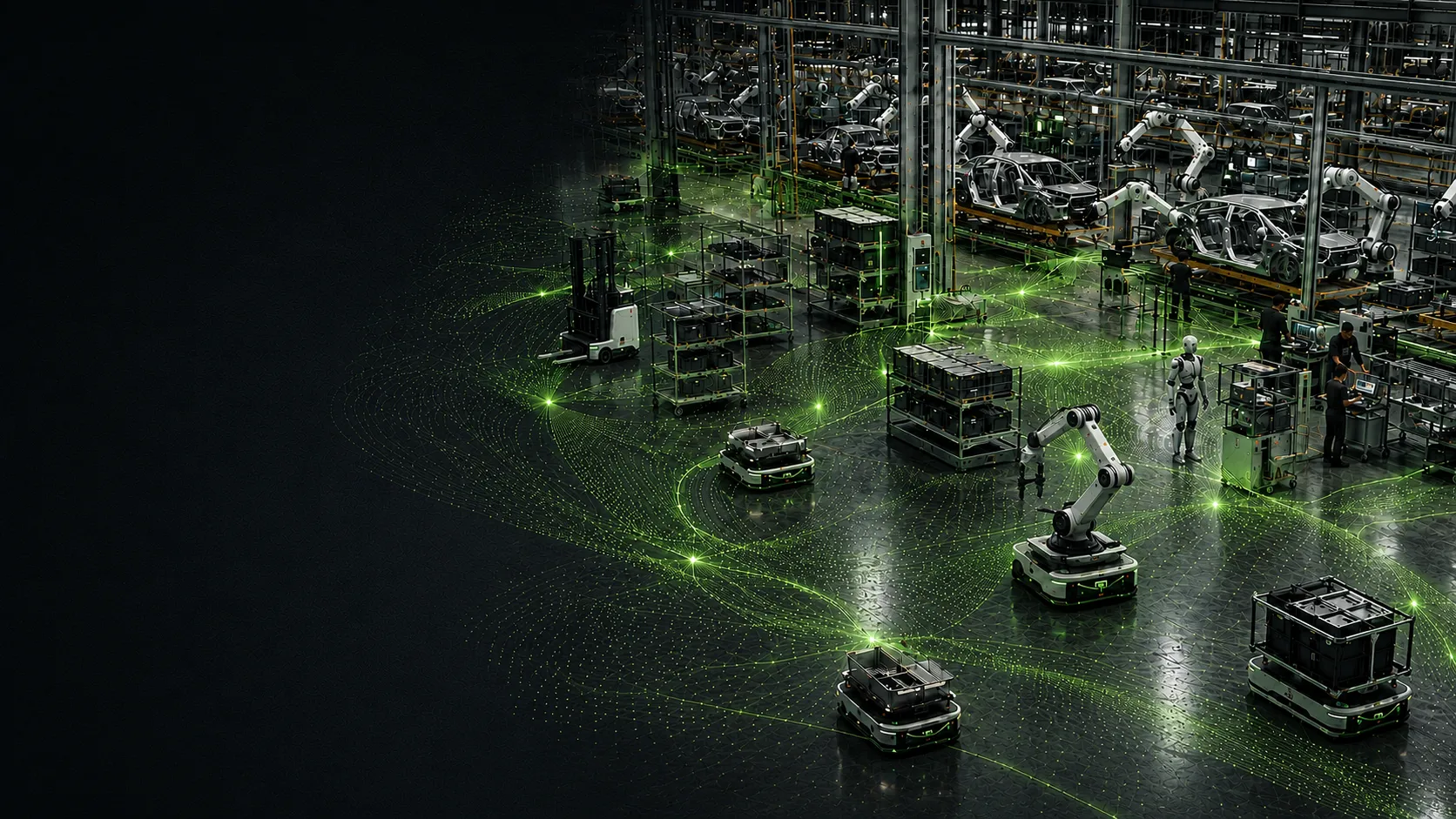
Optimise Your Industrial Robotics
Optimise Your Industrial Robotics
Scroll down


What We Do
Mavarick is the optimisation layer for Physical AI, maximising output from every robot, fleet and factory
What we do
Mavarick is the optimisation layer
maximising output from every robot, fleet and factory.
Trusted by Industry Leaders
Manufacturer leaders use Mavarick to optimise their operations





The Challenges Facing Robotic Operations
Physical AI is Being Adopted at Scale
Robotic fleets are now critical production infrastructure

Control Systems Lack Production Context
Execution is managed, production outcomes are not optimised


Robot Downtime Impacts Production
Robots unavailable when production needs them most

Throughput potential not realised
Existing robotic capacity does not translate into maximum production output

.svg)
Why Mavarick
Mavarick combines proprietary optimisation, predictive AI and production-ready digital twins to maximise output from industrial robot fleets. Built by an experienced technical team and proven in complex production environments.
# Solution 1
# Throughput Potential Not Realised
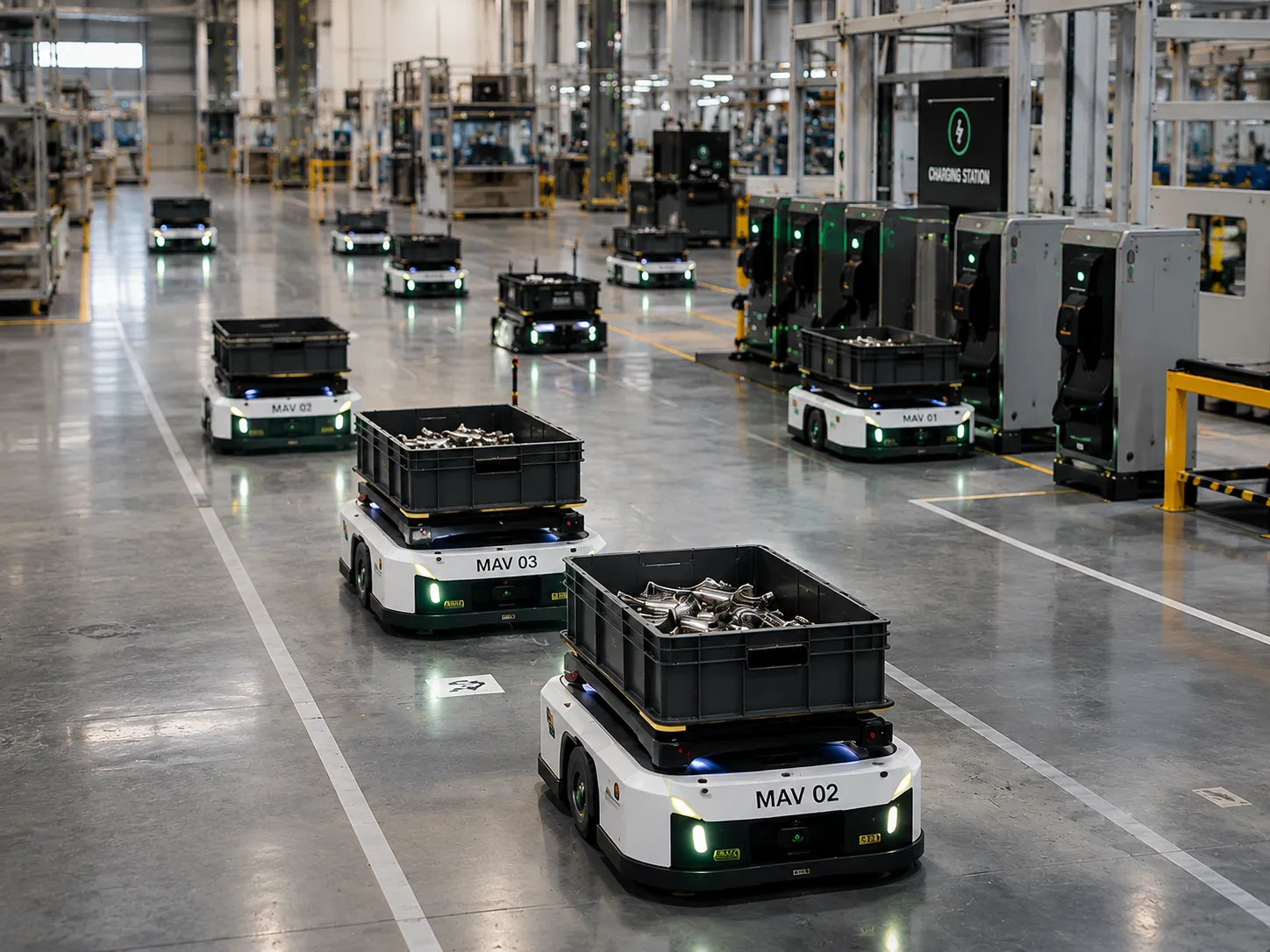
Fleet Performance Optimisation
Continuously improve the productive capacity of robotic fleets by optimising availability, utilisation and charging against live operational demand.
Throughput Optimisation
Increase the throughput the existing fleet can deliver by making better use of available robotic capacity.
Fleet Availability & Utilisation
Keep more robots productive when production needs them, reducing idle and unavailable time.
Charging Optimisation
Schedule charging around operational demand to maximise productive availability.
# Solution 2
# The Fleet Doesn't Know What Production Needs
Production-Aware Optimisation
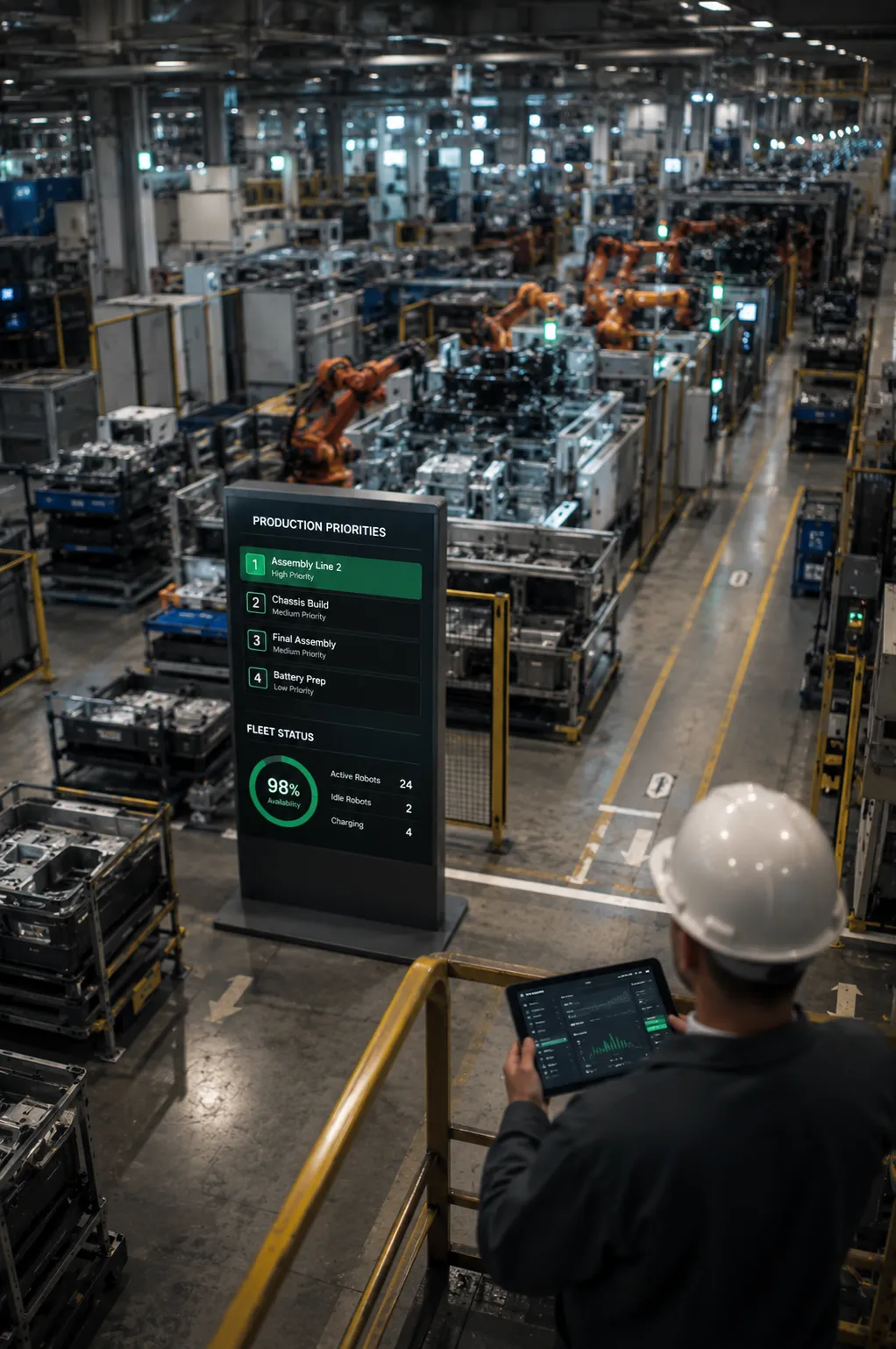
Continuously align robotic activity with live production priorities so the work that matters most is completed at the right time.
Production Prioritisation
Prioritise work based on its impact on production, rather than simply queue order or proximity.
Dynamic Task Sequencing
Continuously adjust what should happen next as production conditions and priorities change.
Production Alignment
Focus available robotic capacity on the areas of the operation where it creates the greatest production value.
# Solution 3
# Know How It Will Perform Before You Deploy
Deployment Optimisation
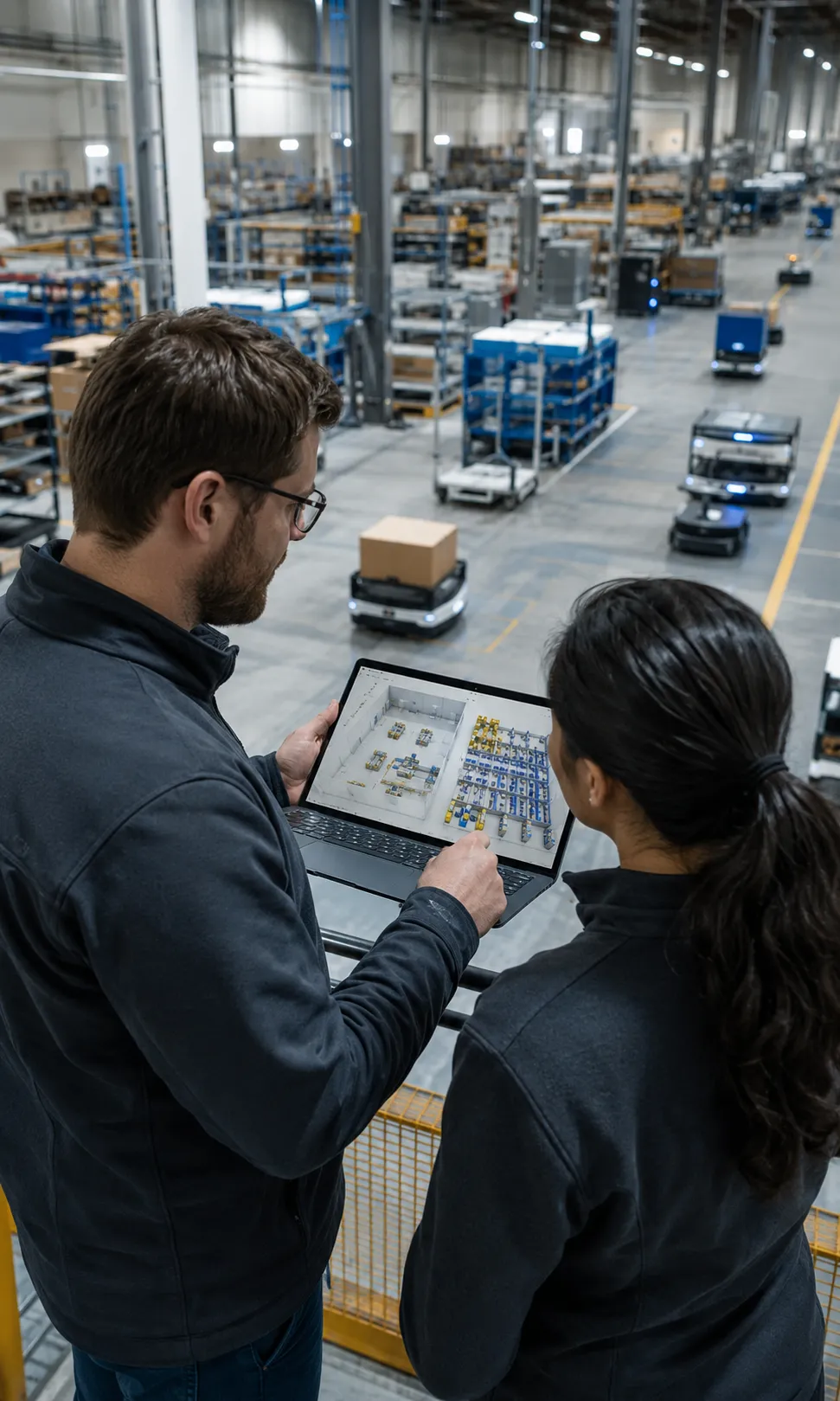
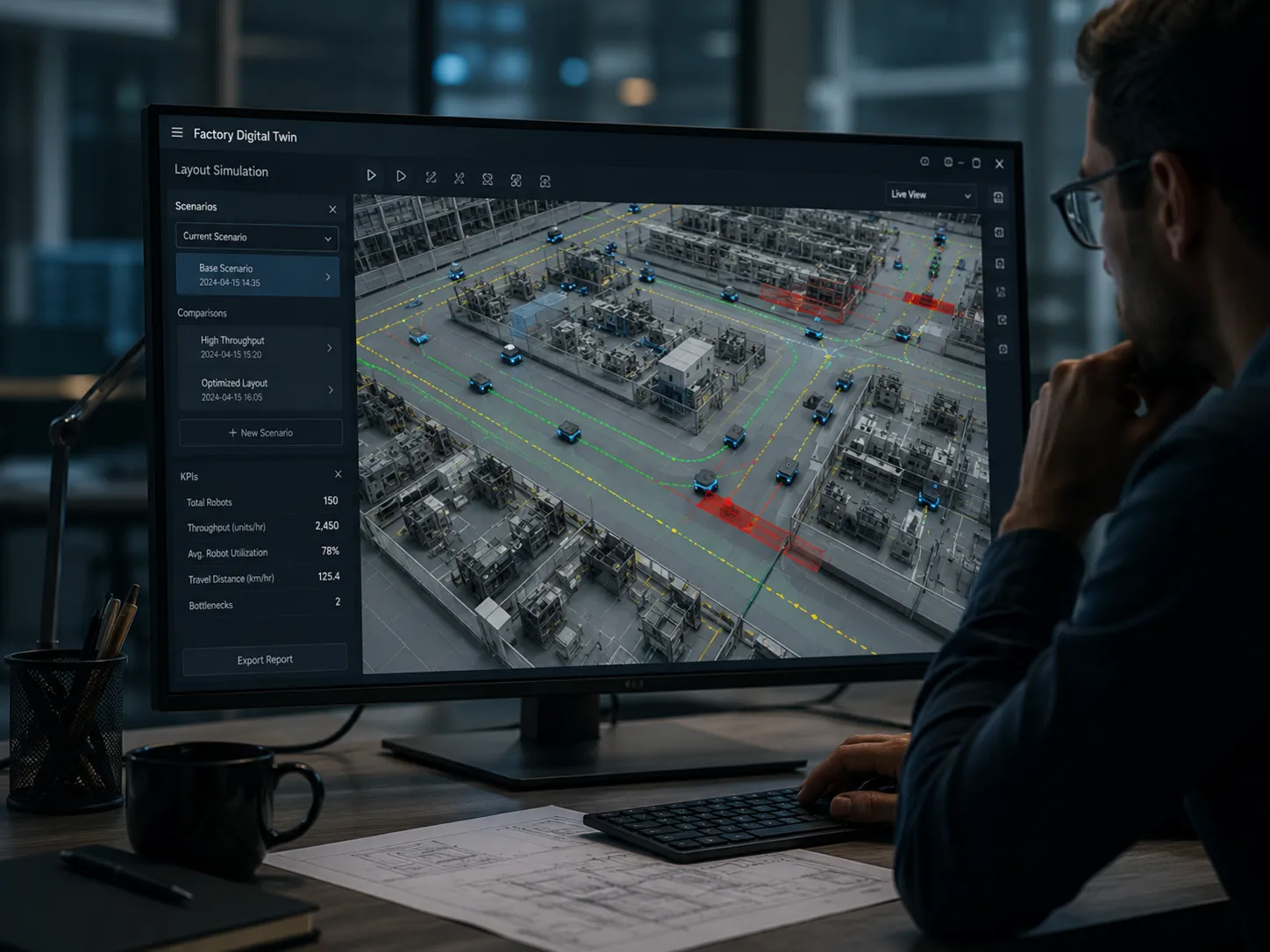
Use digital twins to optimise robotic deployments before going live or changing production, testing fleet size, layout and operating scenarios against required throughput.
Digital Twin Modelling
Create a virtual model of the robotic operation using real production requirements, fleet characteristics and operating constraints
Scenario Testing
Compare fleet sizes, layouts, demand profiles and operating strategies before committing to change.
Capacity Validation
Validate that the proposed robotic operation can reliably meet required production throughput.
# Solution 4
# Lack of Traceability
Supplier Engagement & Optimisation
Stay ahead of CSRD, CBAM, and GHG Protocol with multi-framework alignment and seamless ERP, PLM, and Catena-X data exchange.
Automated Engagement
Automates supplier requests, reminders, validations, and quality scoring — at any scale.
Supplier Benchmarking
Benchmarks suppliers on emissions, cost efficiency, and readiness against standards like SBTi and Catena-X.
Optimised Sourcing
Surfaces cleaner, more cost-effective supplier options with transparent impact modelling.
.webp)
01
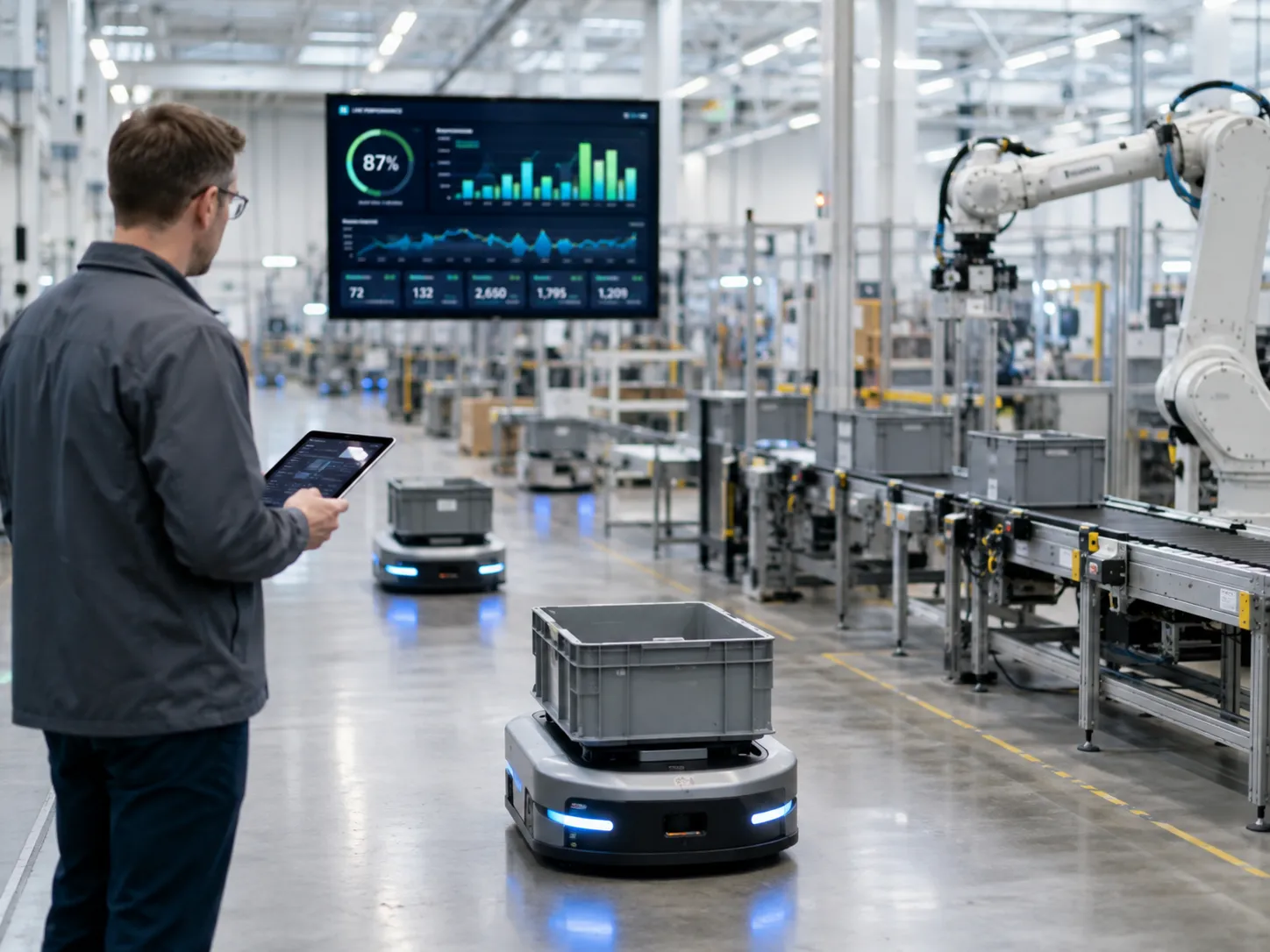
Increase Production Throughput
Turn more robotic capacity into productive output by continuously improving fleet availability, utilisation and charging around live production demand
02
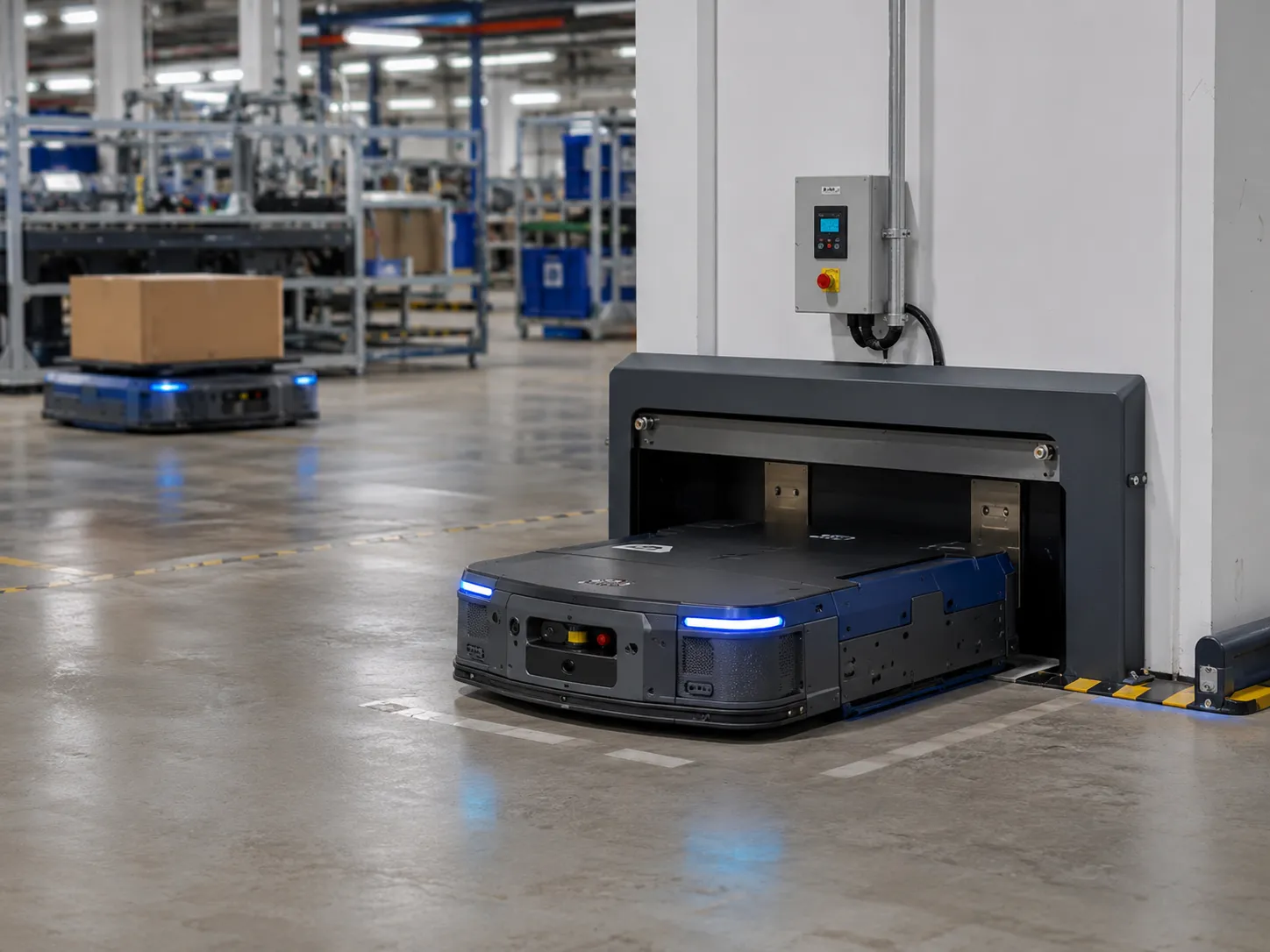
Keep More Robots Productive
Increase the proportion of the fleet available for productive work by reducing unnecessary idle time, poorly timed charging and avoidable intervention.
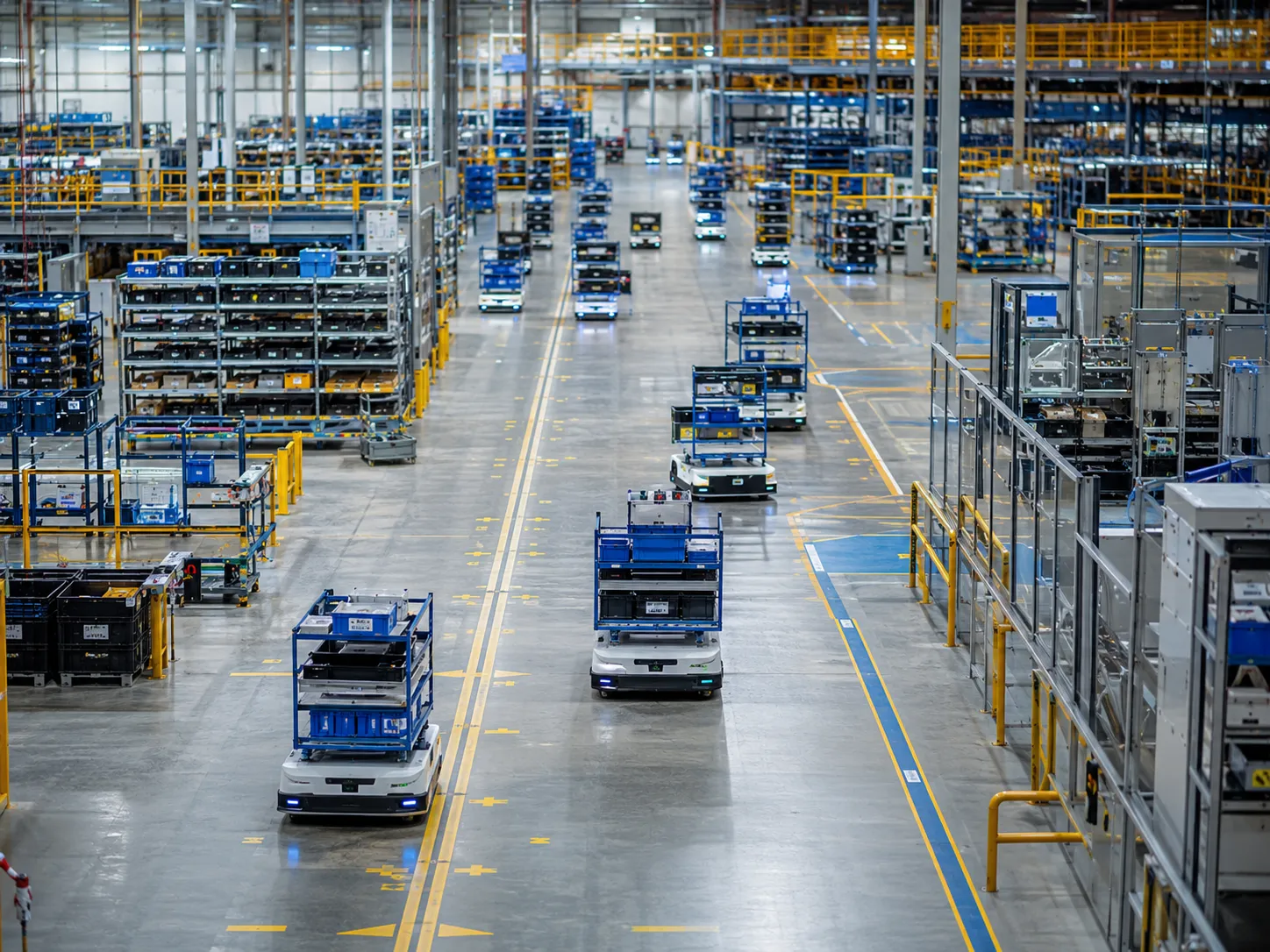
03
Scale Robotics More Efficiently
Support larger fleets and higher production volumes without operational complexity increasing at the same rate.
04
Deploy for Maximum Performance
Use digital twin modelling to validate fleet size, layout and operating strategy before deployment or major production changes.
The Mavarick Platform
.webp)
.webp)
Integrity - The Trusted Data Workflow
Three AI-powered steps that transform
supplier data into an audit-ready foundation.
- Automated supplier engagement at scale.
- Guided workflows make submissions easy for suppliers.
- Progress tracking and automated reminders boost response rates.
- Standardised formats ensure consistency from the start.
.webp)
.webp)
Insight - The Complete Coverage Workflow
Close every data gap. See the full Scope 3 picture.
- Detect and highlight missing supplier responses.
- Automate engagement at scale to boost coverage.
- Fill unavoidable gaps with transparent, AI-driven estimates.
.webp)
.webp)
Action - The Intelligent Action Workflow
Move beyond reporting to real-world impact.
- Forecast and benchmark supplier emissions.
- Compare suppliers and materials on cost + carbon.
- Optimise sourcing and logistics for measurable reductions.
.webp)
.webp)
Assurance - The Assurance Workflow
Compliance made simple. Confidence built in.
- Multi-framework alignment: CSRD, CBAM, GHG Protocol, ISO 14067, Catena-X.
- Standardise data from suppliers, BOMs, and logistics.
- Generate traceable, audit-ready reports at speed.
#Testimonial
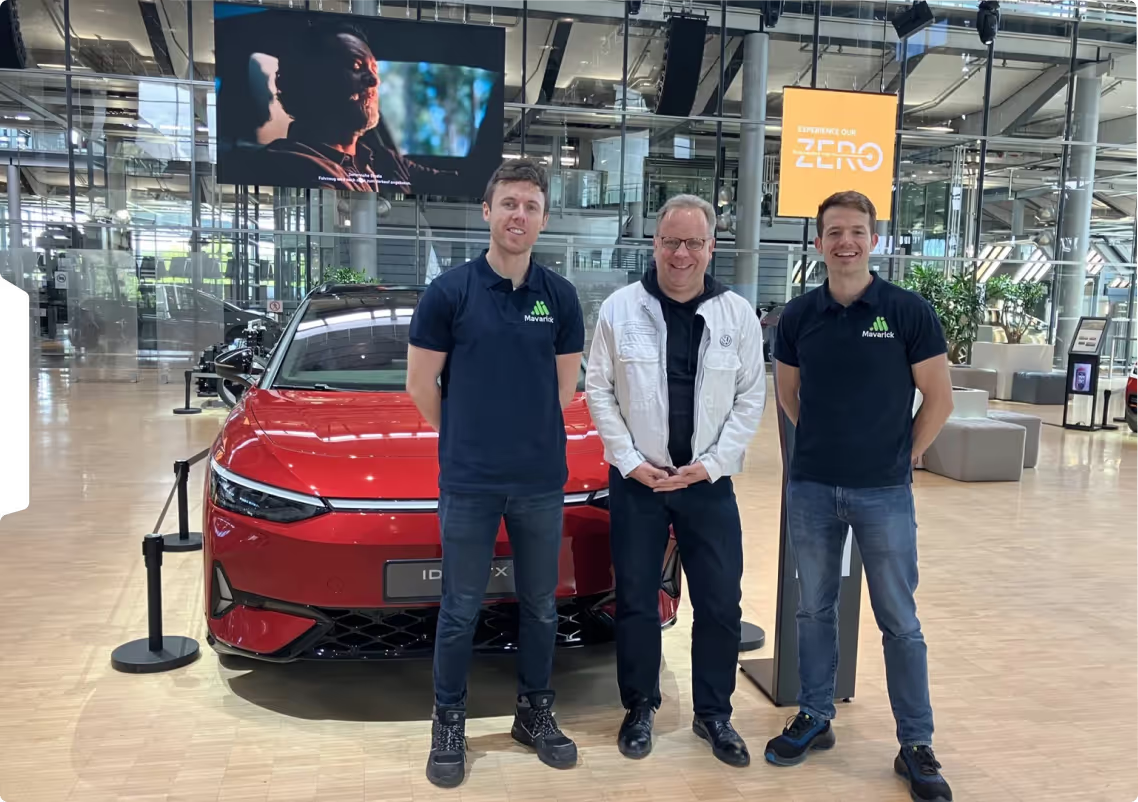
“Our collaboration with Mavarick has demonstrated how optimisation technology can maximise the performance of robotic fleets at scale. The work aligns strongly with Volkswagen’s ambition to expand automation while increasing productivity, fleet availability and production resilience. We are already extending these foundations across multiple sites”
Head of New Mobility and Innovations, Volkswagen



Physical
AI
+
Industrial Robot Optimisation
Robotic optimisation delivering higher output, greater availability and more value from every robot fleet
.svg)
.svg)
Contact Us
Physical
AI
+
Industrial Robot Optimisation
Robotic optimisation delivering higher output, greater availability and more value from every robot fleet
Company
Contact Us
.svg)
.svg)